The complete guide
Holiday Lighting 101
Everything a curious homeowner — or a would-be installer — should know about professional Christmas and holiday lighting. What the pros actually do, the styles to choose from, when the season runs, and what it costs. No jargon, no hype.
The basics
What professional holiday lighting really is
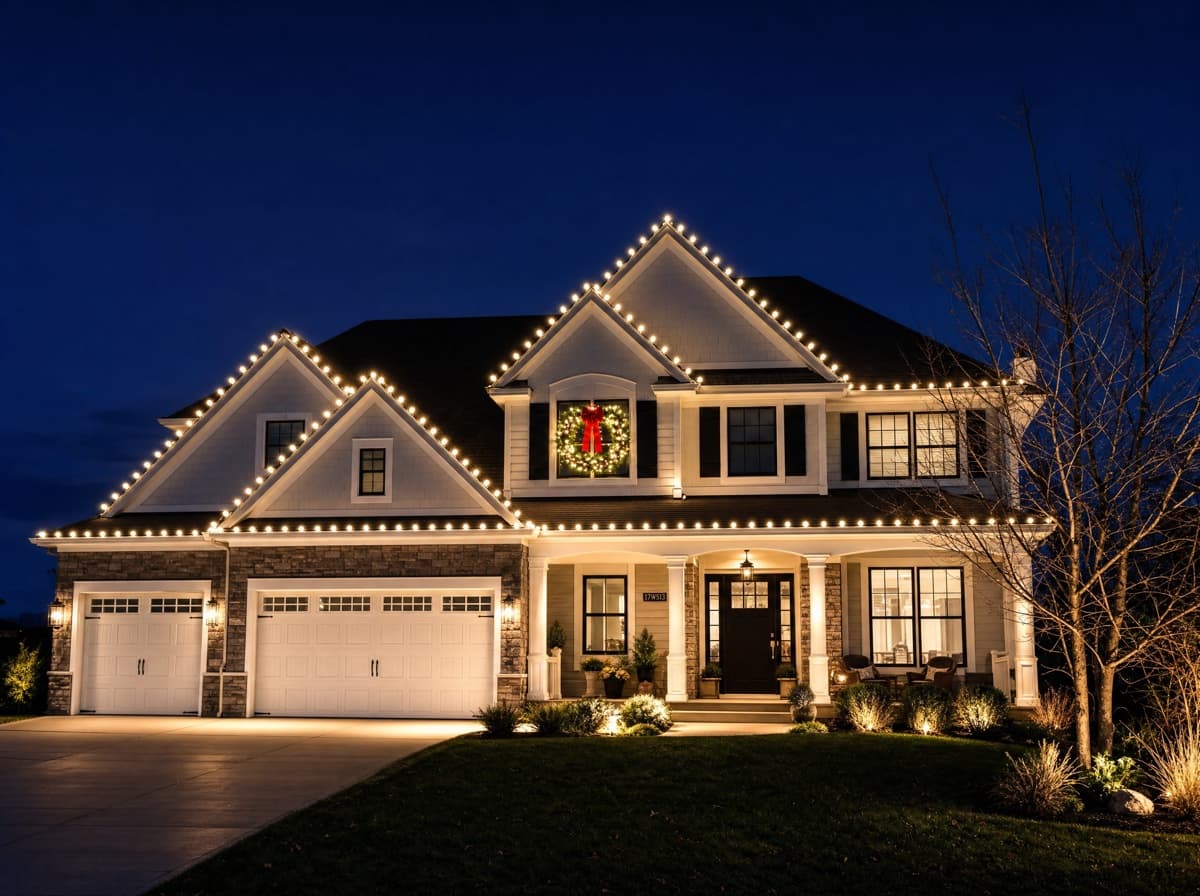
A professional install isn't just “someone else hanging store-bought strands.” It's a designed, measured, and warrantied system built for your specific home — and that's why so many homeowners hire out instead of climbing the ladder themselves.
Commercial-grade bulbs
Pros run heavy-duty C9/LED lights built to last multiple seasons — a world apart from the thin box-store strands that fade or fail after a year.
Custom-cut wire
Runs are measured and cut to your exact roofline, so lights sit clean and even with no extra strand dangling off the eaves.
Warranty & service
A real install comes with a promise: if something goes dark during the season, the crew comes back and fixes it. No ladder, no cold fingers.
The style guide
Bulbs, styles & the look you're after
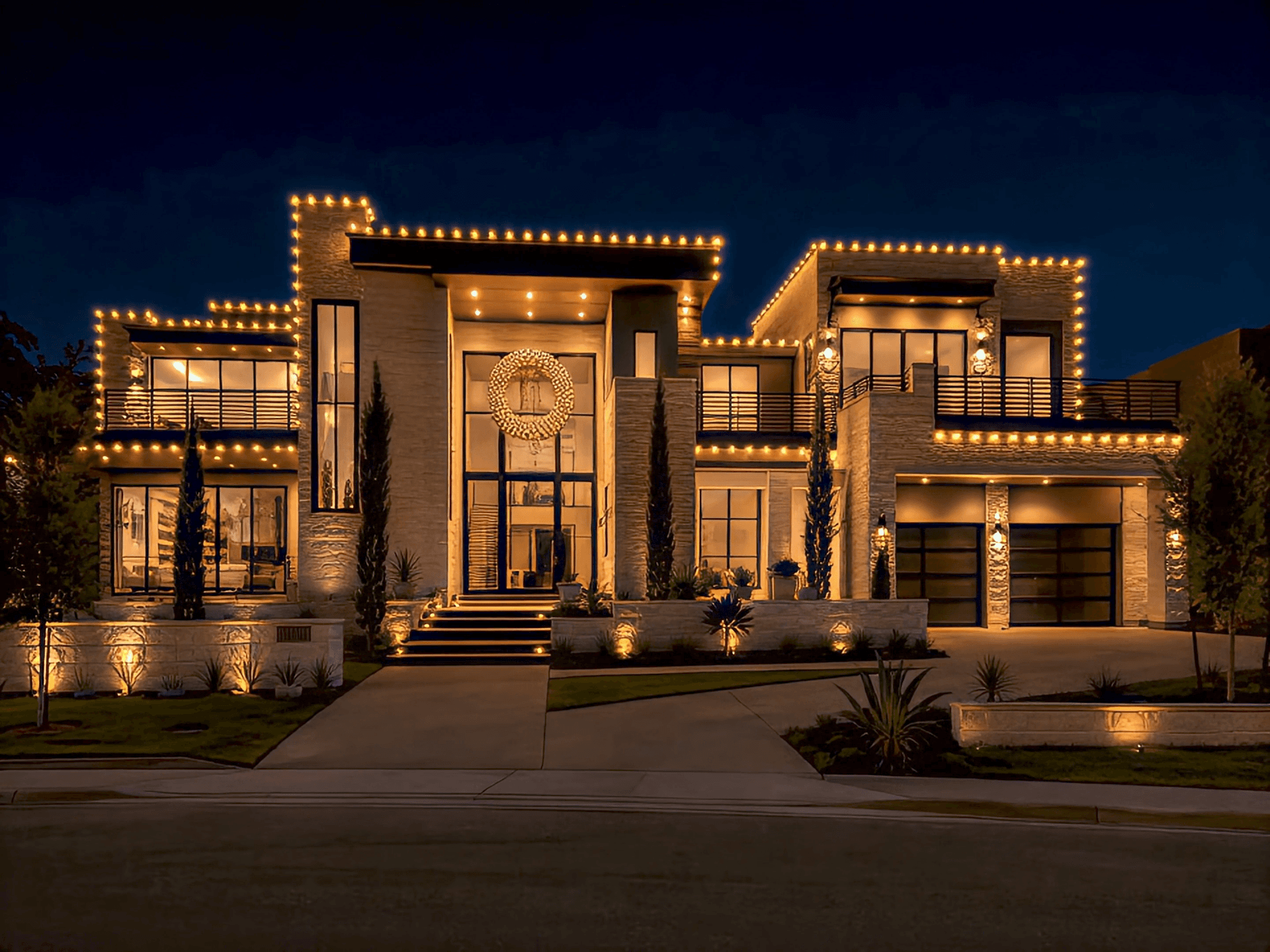
A quick tour of the pieces a pro puts together. Mix and match these to design a home that looks intentional from the curb.
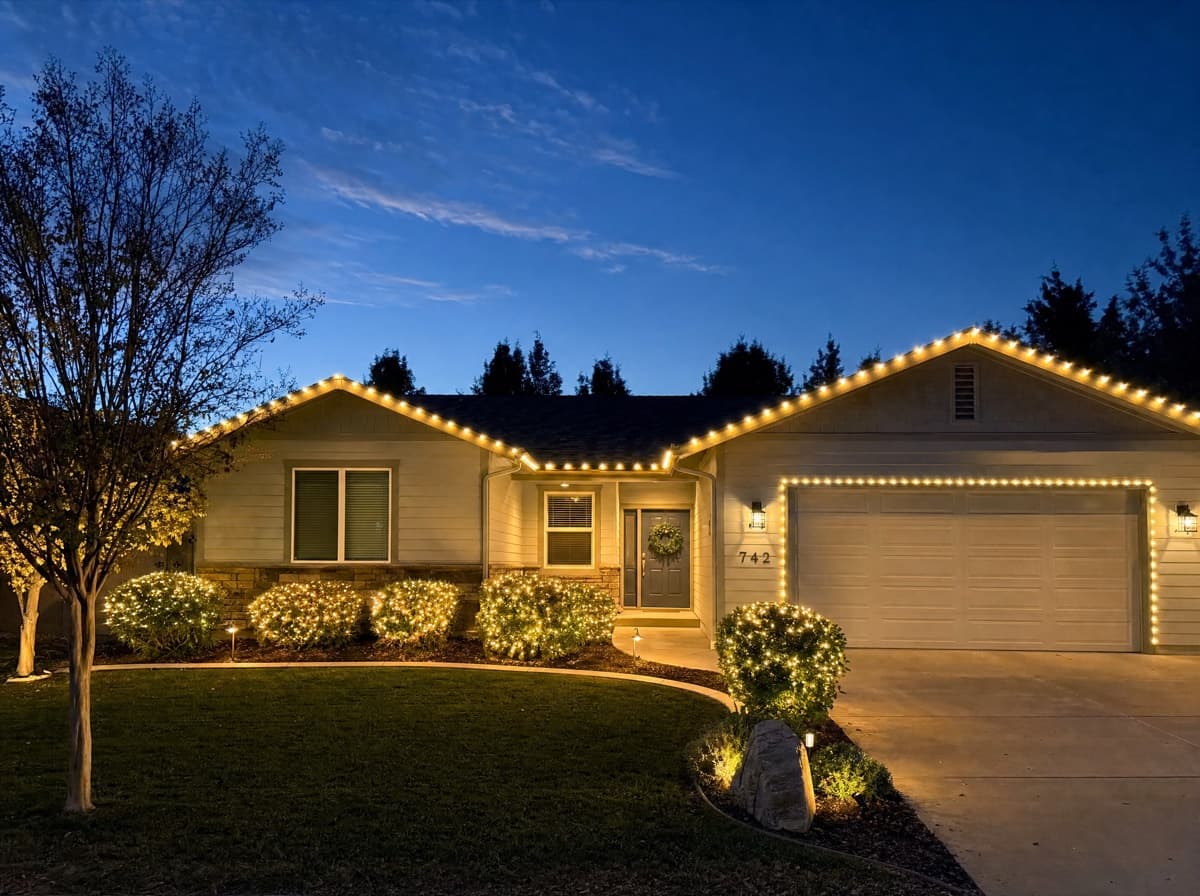
C9 roofline outline
Bold, street-visible glow along the eaves and peaks.
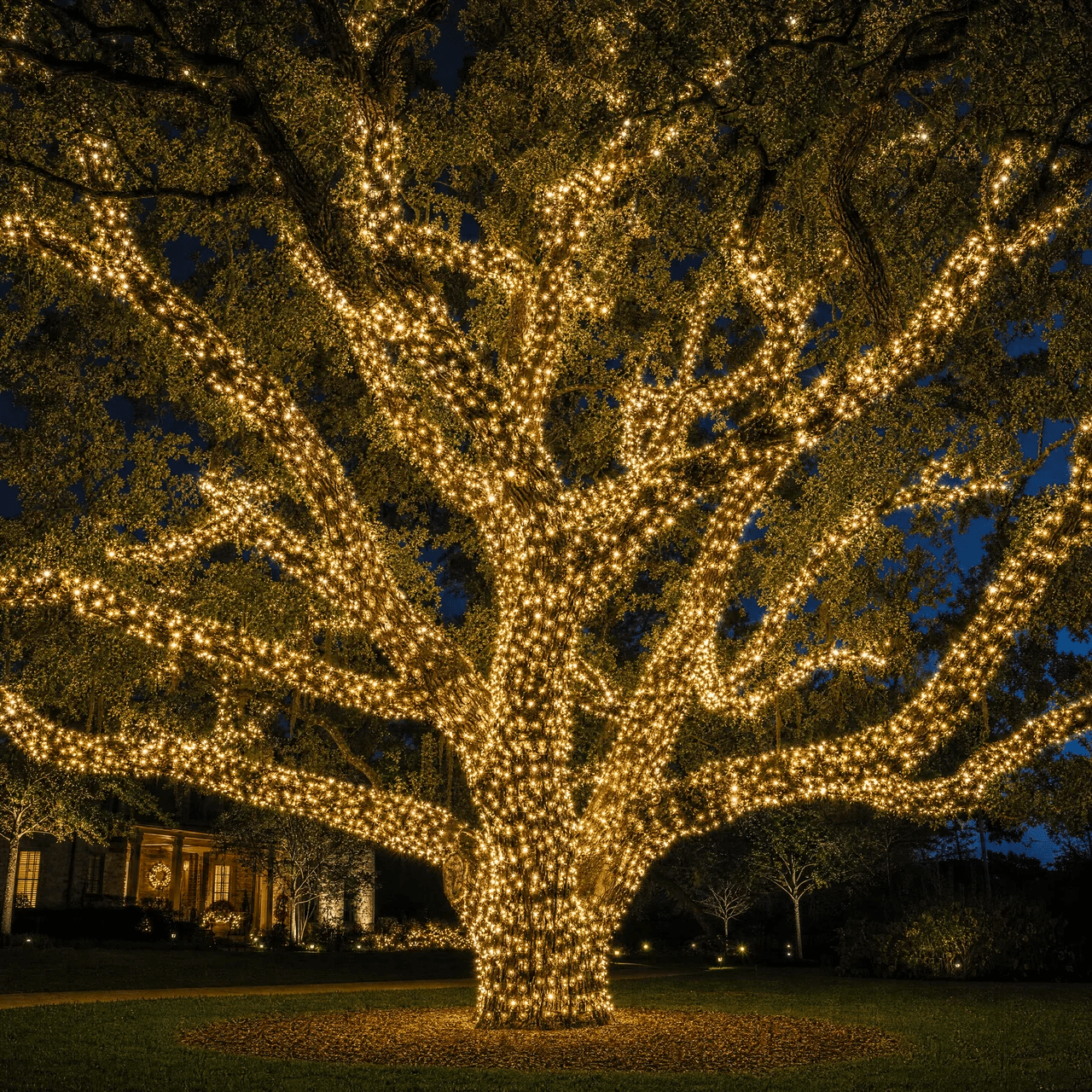
Mini-light tree wrap
Dense sparkle wrapped up trunks and branches.
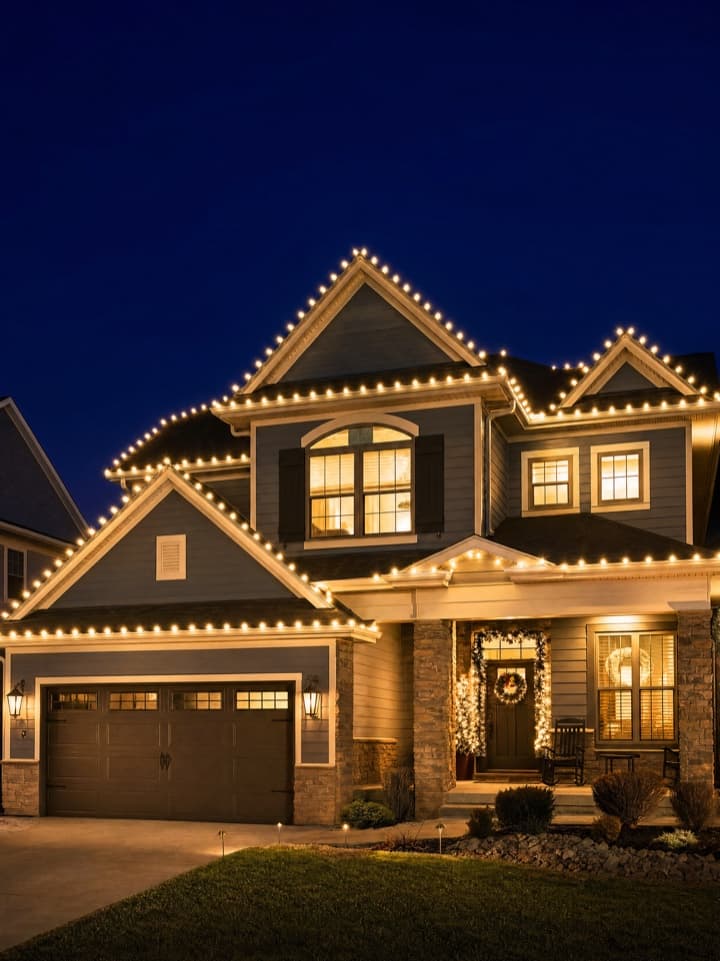
Warm-white whole-home
A cozy, traditional look kept consistent throughout.
C9 bulbs
The classic roofline look
The big, teardrop-shaped bulb most people picture on a rooftop. C9s throw the boldest, most visible glow from the street, which makes them the go-to for eaves, ridgelines, and peaks. On commercial-grade jobs they're LED, so they stay cool and sip power.
C7 bulbs
A smaller, tidier glow
The C9's smaller sibling. C7s give a similar shaped-bulb look with a more delicate footprint — a nice fit for windows, doorframes, smaller rooflines, and detail work where a C9 would feel oversized.
Mini string lights
Wraps, bushes & trees
Tiny bulbs on a thin wire, perfect for wrapping tree trunks and branches, hedges, columns, and railings. This is the workhorse for anything you want to feel dense and sparkly rather than lined out bulb by bulb.
Icicle lights
Dripping from the eaves
Strands with hanging drops of light that mimic icicles off a gutter line. They add movement and depth to an otherwise straight roofline and pair well with a C9 ridge above them.
Wreaths & garland
Doors, columns & railings
Lit wreaths and garland dress the parts of a home your roofline can't reach — the front door, porch posts, and railings. They're the finishing touch that makes an install feel designed rather than just outlined.
Color & temperature
Warm, cool or multicolor
Warm white reads cozy and traditional; cool white looks crisp and modern; multicolor is playful and family-favorite. Most pros help you pick one direction and keep it consistent so the whole home looks intentional from the curb.
The season
How the lighting season actually runs
From the first October install to February takedown, here's the rhythm of a professional holiday-lighting season — and why booking early is the move.
Installs begin
Professional crews start hanging in October and roll through November, well ahead of the holidays. Booking early means you're lit and enjoying it while everyone else is still untangling strands — and the best crews fill their calendars fast.
Peak weeks
The middle of November is the busy stretch when most homes light up. If you wait until this window to book, availability tightens quickly, so the earlier you're on the schedule the better your options.
Service & touch-ups
A good pro stands behind the install. If a bulb or run goes out during the season, they come back and make it right — no ladder, no cold fingers, no problem for you.
Takedown & storage
After the holidays, the crew returns to take everything down. Many pros then label, coil, and store your custom-cut lights for you, so next season is a fast re-hang instead of a fresh start.
Book early. Because installs begin as early as October and the best crews fill their calendars quickly, the homeowners who reach out earliest get the widest choice of dates — and the longest stretch of enjoying their lights.
The money
What holiday lighting costs — honestly
Every home is different, so reputable pros quote each one individually rather than quoting a flat price sight-unseen. Here's how that quote actually gets built.
Most pricing starts with linear feet
The common industry model prices by the linear foot of roofline and trim to be lit, then layers on the factors below. It's a fair way to quote because it scales with the actual work — a sprawling two-story home simply has more edges to light than a compact ranch.
Roofline linear footage
Most professional pricing is built around linear feet of roofline and trim to be lit — the more edges and runs, the more materials and labor. It's the single biggest driver of a quote.
Height & complexity
A steep, multi-story, or cut-up roofline with lots of peaks takes longer and calls for more equipment and safety measures than a simple single-story ranch. Complexity adds to both time and price.
Trees, wraps & features
Wrapping trunks and branches, lighting bushes, and dressing columns or railings are add-ons beyond the roofline. Big tree wraps in particular are labor-heavy and priced on their own.
Materials & who owns them
Commercial-grade C9/LED lights, custom-cut wire, and quality clips cost more up front than a box-store strand — but they last for years. Some pros include materials in the price; others rent or sell them to you.
One honest note: because pricing depends so heavily on your specific roofline, be wary of any “one-size” number online. The only real price is the one a pro gives after seeing — or measuring — your home.
Run a lighting business?
LightMaster is the platform built for it.
Sell jobs on the spot with photo-real mockups, then quote, schedule, route your crews, and get paid — all in one place made for holiday lighting pros. Every customer-facing action waits for your approval before it goes out.
Common questions
The things homeowners and first-time installers ask us most.
Two things: materials and fit. Pros use commercial-grade C9/LED bulbs and wire that's cut to your exact roofline, so runs sit clean with no leftover strand dangling off the eave. That gear is built to last multiple seasons and usually comes with a warranty and mid-season service — where a box-store strand is designed to be cheap and disposable.
As early as you can. Professional crews begin installing as early as October and roll through November, ahead of the holidays, and the best ones book up fast. Getting on the schedule early means you're lit sooner and you get first pick of dates before the mid-November peak weeks fill in.
C9 bulbs are the big teardrop bulbs you picture on a rooftop — the boldest look from the street, ideal for rooflines and peaks. C7s are a smaller version of the same shape, great for windows and detail work. Mini string lights are tiny bulbs on thin wire, made for wrapping trees, bushes, columns, and railings.
Most professional quotes are built around linear feet of roofline, then adjusted for height and complexity, tree wraps and other features, and whether the materials are included. Because every home is different, reputable pros give you a custom quote rather than a flat sticker price.
With a professional install, usually yes. Crews return after the holidays — typically across January and February — to take everything down. Many pros will then label and store your custom-cut lights so the next season is a quick re-hang.
It's a style call. Warm white feels cozy and traditional, cool white looks crisp and modern, and multicolor is fun and family-friendly. The key is picking one direction and keeping it consistent across the whole home so it reads as intentional from the curb.